That Three-Second Goldfish Memory Myth Just Got Destroyed by Actual Fish Scientists — And the Real Number Is Shockingly High
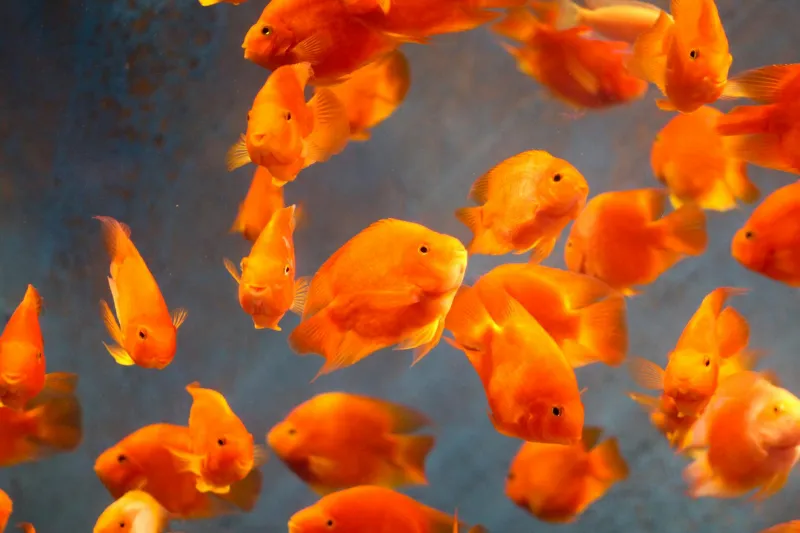
The Insult That Built an Empire
"You have the memory of a goldfish."
It's the perfect put-down: quick, cutting, and backed by what everyone "knows" to be scientific fact. Goldfish supposedly forget everything after three seconds, making them the ultimate symbol of absent-mindedness. The comparison has become so embedded in popular culture that it shows up in advertising campaigns, comedy routines, and everyday conversation.
There's just one tiny problem with this widely accepted fact: it's completely made up.
What Fish Scientists Actually Discovered
In 2003, a team of researchers at Plymouth University decided to test the goldfish memory myth with actual science. They trained goldfish to navigate mazes, respond to different colored lights, and recognize feeding schedules. The results weren't even close to three seconds.
 Photo: Plymouth University, via amusedbyandalucia.com
The goldfish remembered their training for weeks. Some maintained their learned behaviors for more than three months.
Dr. Phil Gee, who led the study, was amazed by what his team found. "The three-second memory is complete nonsense," he told reporters. "Goldfish can learn quite complex tasks and remember them for extended periods."
 Photo: Dr. Phil Gee, via thumb-lvlt.xhcdn.com
But Plymouth wasn't the only lab getting these results. Researchers in Israel trained goldfish to respond to different pieces of classical music—and the fish could distinguish between composers months later. A team in Canada taught goldfish to play soccer (yes, really) and found they retained the rules and strategies for weeks without practice.
The Memory Tests That Shocked Everyone
The most impressive demonstration came from a 15-year-old student named Rory Stokes, who decided to test goldfish memory for his school science project. He trained his goldfish to swim through hoops, around obstacles, and even play a simple form of limbo.
 Photo: Rory Stokes goldfish science project, via i.redd.it
Not only did the fish learn these tricks, but they remembered them perfectly after a two-week vacation when Rory returned from summer camp. The fish picked up exactly where they'd left off, as if no time had passed at all.
Professional researchers have since replicated similar results hundreds of times. Goldfish have been trained to recognize human faces, respond to different feeding signals, and even learn to avoid areas of their tank associated with mild electric shocks. In every case, their memory lasted for months, not seconds.
Where the Three-Second Myth Actually Came From
Here's the embarrassing truth: nobody knows where the three-second goldfish memory "fact" originated. It doesn't appear in any scientific literature from any era. It's not mentioned in early fishkeeping guides or biology textbooks. The claim seems to have materialized out of thin air sometime in the mid-20th century and spread through pure repetition.
The closest thing researchers have found to a source is a 1965 pet care book that mentioned goldfish having "short memories"—but even that book didn't specify three seconds. Somehow, "short" became "three seconds," and "three seconds" became scientific gospel.
It's a perfect example of how confidently people can state animal "facts" that nobody ever bothered to verify.
Why Everyone Believed It
The goldfish memory myth succeeded because it fit our assumptions about simple creatures. Goldfish swim in circles, they don't show obvious signs of intelligence, and they live in small bowls—how smart could they really be?
This bias shows up everywhere in how humans think about animal intelligence. For decades, scientists assumed that most animals were basically biological robots, incapable of learning or memory. It wasn't until the 1960s and 70s that researchers began seriously testing animal cognition, and the results consistently surprised them.
Goldfish were victims of this assumption. They're small, they're common pets, and they don't express emotions in ways humans easily recognize. So when someone claimed they had three-second memories, it seemed plausible enough that nobody questioned it.
What This Says About How We Absorb "Facts"
The goldfish memory myth reveals something uncomfortable about how confidently we repeat information without checking sources. How many people have used this comparison in conversation? How many writers have included it in articles? How many teachers have mentioned it in classrooms?
All of them were spreading misinformation that could have been debunked with a simple Google search—if anyone had bothered to look.
This pattern shows up constantly in popular "knowledge" about animals. People confidently repeat claims about alpha wolves (debunked by the scientist who originally proposed the idea), the intelligence of dolphins (wildly exaggerated), and the memory of elephants (actually pretty accurate, surprisingly).
The Real Goldfish Story
So what's the truth about goldfish intelligence? They're actually remarkably capable learners with complex social behaviors, long-term memories, and the ability to recognize individual humans. Some goldfish have been trained to perform tricks that would impress most dog owners.
They can distinguish between different people, learn feeding schedules, and even show preferences for certain types of music. In proper environments, they demonstrate problem-solving abilities and social learning—they can watch other fish learn a task and then copy the behavior.
The next time someone compares your memory to a goldfish, you can let them know they're accidentally giving you a compliment. Those fish are a lot smarter than anyone gave them credit for.