How a Plastic Surgeon's Casual Observation About Amputees Became the Internet's Favorite Self-Help Rule

Walk into any bookstore's self-help section, scroll through productivity blogs, or sit through a corporate wellness seminar, and you'll hear the same confident claim: it takes exactly 21 days to form a new habit. This number gets thrown around like scientific fact, complete with citations to "research" and "studies."
There's just one problem. The 21-day rule has nothing to do with habit formation. It came from a plastic surgeon watching patients adjust to their new noses.
The Real Origin Story
Dr. Maxwell Maltz wasn't studying habits when he made his famous observation in the 1960s. As a plastic surgeon, he noticed something interesting about his patients: those who had nose jobs, face lifts, or amputations typically took about 21 days to stop feeling surprised when they looked in the mirror or reached for a limb that was no longer there.
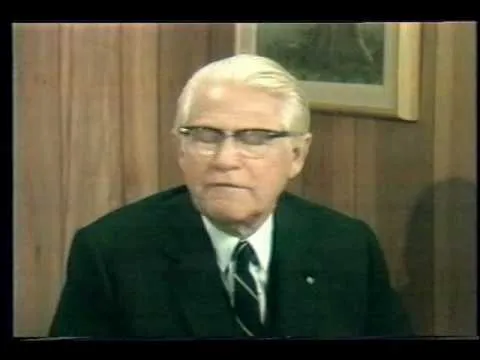 Photo: Dr. Maxwell Maltz, via i.ytimg.com
Maltz wrote about this pattern in his 1960 book "Psycho-Cybernetics," describing how people needed roughly three weeks to adjust to their new physical reality. He was talking about self-image adaptation, not behavioral change. But somewhere between his medical observations and the modern self-help industry, this timeframe got twisted into a universal law about building habits.
The transformation happened gradually. Self-help authors picked up Maltz's work, stripped away the medical context, and repackaged his observation as a behavioral principle. By the time the internet arrived, "21 days to form a habit" had become gospel truth, shared millions of times across social media, productivity apps, and motivational content.
What Actual Habit Research Shows
While motivational speakers were busy repeating the 21-day myth, real behavioral scientists were actually studying habit formation. In 2009, researchers at University College London decided to find out how long it actually takes to build automatic behaviors.
 Photo: University College London, via images-dom.prod.aws.idp-connect.com
They followed 96 people for 254 days, tracking simple habits like drinking a glass of water after breakfast or doing 50 sit-ups before dinner. The results? The average time to reach automaticity was 66 days. But here's the kicker: individual results ranged from 18 days all the way to 254 days.
Some participants never reached full automaticity during the study period. Others developed their new routines relatively quickly. The variation depended on the complexity of the behavior, the person's personality, their environment, and dozens of other factors that the 21-day rule completely ignores.
Why the Simple Answer Stuck
The 21-day myth persists because it offers something psychologically appealing: a definitive timeline for personal change. Three weeks feels achievable but not trivial. It's long enough to seem legitimate but short enough to maintain motivation.
Real habit research is messier. It tells us that building new behaviors depends on complexity, consistency, environmental factors, and individual differences. Some people might master meditation in two weeks; others might need four months to make daily exercise feel automatic. There's no universal timeline because human behavior doesn't work that way.
But "it depends on dozens of factors and could take anywhere from two weeks to eight months" doesn't fit on a motivational Instagram post. "21 days" does.
The Marketing Machine
The wellness industry has built entire business models around the 21-day framework. Apps promise habit transformation in three weeks. Coaches sell 21-day challenges. Supplement companies market 21-day cleanses. The number has become a marketing tool because it creates urgency and manages expectations.
Meanwhile, legitimate behavioral scientists continue studying the actual mechanisms of habit formation. They've identified factors that matter: starting small, stacking new behaviors onto existing routines, designing supportive environments, and accepting that automaticity develops gradually.
What Actually Helps Build Habits
Instead of counting days, focus on consistency and sustainability. Research suggests that missing one day doesn't derail progress, but missing two days in a row makes habit formation significantly harder. The key is repetition in consistent contexts, not hitting an arbitrary timeline.
Environmental design matters more than willpower. Making good behaviors easier and bad behaviors harder has more impact than trying to maintain motivation for exactly 21 days. If you want to exercise regularly, lay out your workout clothes. If you want to eat better, keep healthy snacks visible and convenient.
The Takeaway
Dr. Maltz made a perfectly reasonable observation about how long his surgical patients needed to adjust to their new appearance. Somehow, this became the internet's favorite fact about behavioral change, despite having nothing to do with habits.
Real habit formation is more complex and individual than any simple rule can capture. But that complexity doesn't sell books or apps, so we keep getting sold the same 60-year-old observation about plastic surgery patients, repackaged as cutting-edge behavioral science.
Next time someone confidently tells you it takes 21 days to build a habit, you can share the real story: it started with people getting used to their new noses, not their new routines.