The Reassuring Lie That's Making People Sick
You've just finished a hike through the woods and found a tiny tick crawling on your arm. It's barely the size of a poppy seed — nothing like the bloated, grape-sized creature you imagine when someone mentions a "dangerous" tick. Your hiking buddy takes one look and waves dismissively: "Don't worry about that little thing. It's way too small to give you Lyme disease."
This scenario plays out thousands of times every summer across America, and it's based on one of the most dangerous misconceptions in modern health. The belief that small ticks can't transmit Lyme disease has become so widespread that it's literally preventing people from seeking treatment for one of the fastest-growing infectious diseases in the United States.
What the CDC Actually Says About Tick Size
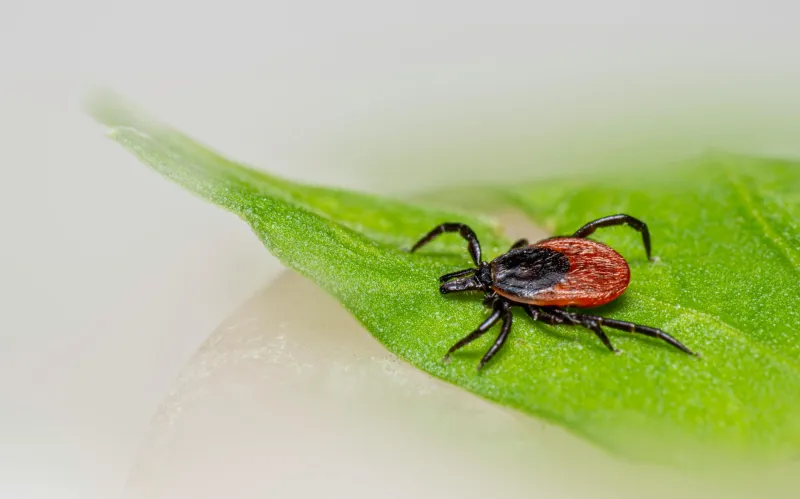
According to the Centers for Disease Control and Prevention, the ticks most likely to transmit Lyme disease — deer ticks, also called blacklegged ticks — are naturally tiny. Adult females are about the size of a sesame seed, while the nymphs that are most active during spring and early summer are even smaller, roughly the size of a pinhead.
 Photo: Centers for Disease Control and Prevention, via www.shutterstock.com
Here's the crucial part that most people get wrong: these ticks don't need to be engorged with blood to transmit disease. In fact, the CDC's research shows that Lyme disease transmission typically occurs when infected ticks have been attached for 36 to 48 hours — but the tick doesn't need to be visibly swollen to pass along the bacteria.
Dr. Kirby Stafford, a tick expert at the Connecticut Agricultural Experiment Station, explains it this way: "The size of the tick when you find it tells you very little about how long it's been attached or whether it's transmitted disease. A tick that's been feeding for 24 hours might still look relatively small, but it could already be in the process of transmitting Lyme bacteria."
 Photo: Connecticut Agricultural Experiment Station, via eadn-wc01-4177395.nxedge.io
The Origins of a Dangerous Misunderstanding
So where did this size-based reassurance come from? The confusion stems from well-meaning but oversimplified public health messaging from the 1990s, when Lyme disease awareness campaigns were first ramping up.
Early educational materials often featured dramatic photos of large, engorged ticks to grab attention and illustrate the "typical" appearance of a disease-carrying tick. The message was meant to be: "Look for ticks that look like this." But what many people heard was: "Only worry about ticks that look like this."
This visual bias was reinforced by the fact that engorged ticks are simply more noticeable. When people found large, blood-filled ticks and later developed Lyme disease, the connection seemed obvious. The smaller ticks that were actually responsible for most infections often went unnoticed entirely, creating a false correlation between tick size and danger.
Medical professionals inadvertently contributed to the problem by focusing on attachment time rather than tick appearance. When doctors said things like "Don't worry unless the tick has been attached for more than 24 hours," patients began associating longer attachment times with larger, more engorged ticks.
The Reality of Tick Behavior
To understand why the size myth is so dangerous, you need to know how ticks actually feed. When a tick first attaches, it's small and flat. As it feeds over the course of several days, it gradually swells with blood. But the transmission of Lyme bacteria doesn't wait for this engorgement process to complete.
The bacteria that cause Lyme disease live in the tick's gut. When the tick begins feeding, these bacteria multiply and eventually make their way to the tick's salivary glands, where they can be transmitted to the host. This process typically takes 36 to 48 hours, but it can happen even when the tick is still relatively small.
Even more concerning, some research suggests that transmission might occur more quickly than previously thought, especially if the tick has fed on another host recently. A study published in the journal PLOS One found evidence of transmission in as little as 16 hours under certain conditions.
Regional Variations and Missed Cases
The small tick misconception has had particularly serious consequences in parts of the country where Lyme disease is endemic but awareness remains low. In states like Virginia, North Carolina, and parts of the Midwest, where Lyme disease cases are increasing rapidly, many healthcare providers still rely on outdated information about tick size and attachment time.
Dr. Neil Spector, an oncologist who contracted Lyme disease himself, has written extensively about how the size myth delayed his own diagnosis. "I found a tiny tick and removed it immediately," he recalls. "Multiple doctors told me not to worry because it was so small and hadn't been attached long enough to transmit disease. It took years to get properly diagnosed."
This pattern repeats itself across the country. Patients present with classic Lyme symptoms but are dismissed because they only remember finding small ticks, or because they removed ticks quickly. The assumption that small equals safe has led to countless missed diagnoses and delayed treatment.
The Insurance and Testing Complications
The size myth has created additional problems within the healthcare system itself. Some insurance companies have been reluctant to cover Lyme testing for patients who only report finding small ticks, viewing such cases as "low risk." This has created a perverse incentive where patients learn to exaggerate the size of ticks they've found, or doctors avoid ordering tests based on tick appearance rather than symptoms.
Meanwhile, the standard Lyme disease tests are notoriously unreliable in early-stage infections, making clinical judgment even more important. When doctors dismiss cases based on tick size, they may miss the narrow window when early treatment is most effective.
What You Actually Need to Know About Ticks
The truth about Lyme disease transmission is both simpler and more complex than the size-based rules most people follow. Here's what actually matters:
Any tick bite in an endemic area should be taken seriously, regardless of the tick's size when you find it. The appearance of the tick tells you almost nothing about how long it's been attached or whether it's transmitted disease.
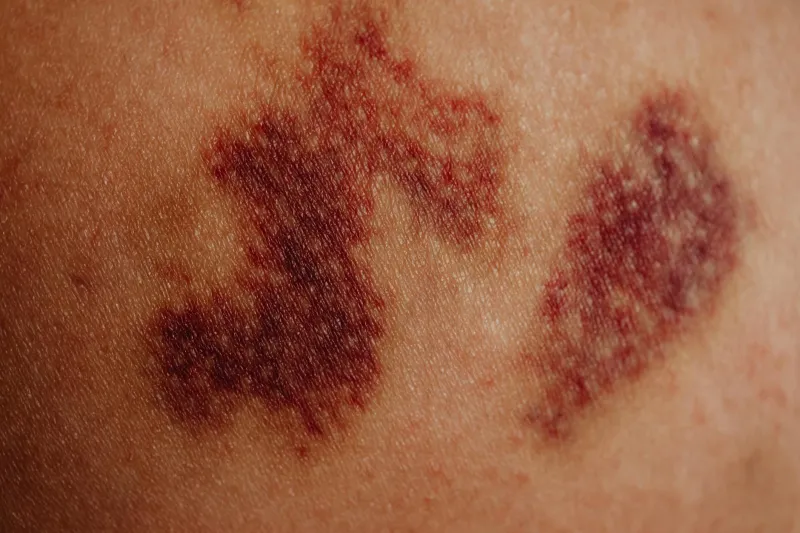
Instead of focusing on tick size, pay attention to symptoms. The classic "bull's-eye" rash appears in only about 70% of cases, and it doesn't always look like the textbook photos. Early Lyme disease can cause flu-like symptoms, fatigue, joint pain, and neurological symptoms that are often mistaken for other conditions.
If you're in an area where Lyme disease is common and you develop unexplained symptoms after spending time outdoors, seek medical attention regardless of whether you remember finding any ticks at all. Many people with confirmed Lyme disease never recall being bitten.
Moving Beyond Dangerous Simplifications
The small tick myth represents a broader problem with how health information spreads in America. Complex medical realities get reduced to simple rules that are easy to remember but dangerously incomplete. "Only big ticks matter" is the kind of memorable guideline that spreads quickly through social networks, even when it contradicts scientific evidence.
Public health messaging needs to evolve beyond these oversimplifications. Instead of teaching people to judge ticks by their size, we should be emphasizing symptom recognition, the importance of tick prevention, and the need for early medical consultation in endemic areas.
The next time you find any tick — big or small — remember that size doesn't determine danger. When it comes to Lyme disease, the smallest threats often pose the biggest risks.