Scientists Actually Tested Whether Shaving Makes Hair Grow Thicker — The Results Debunk Decades of Parental Warnings
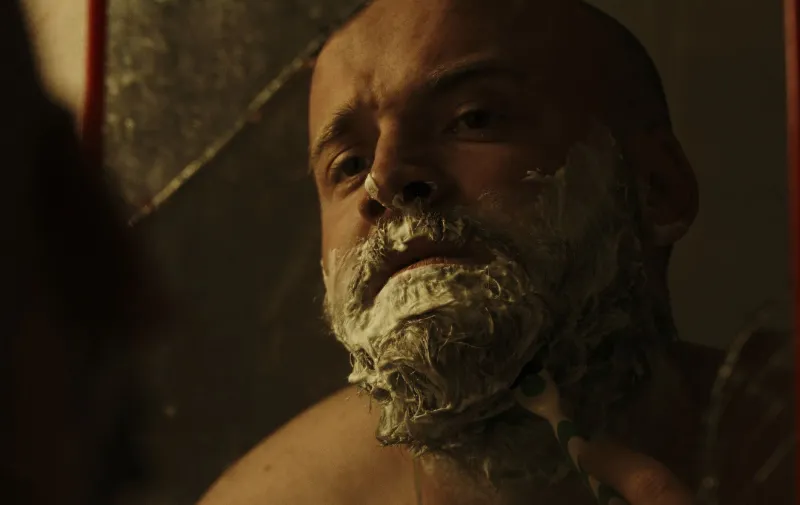
The Warning Every Teenager Heard
"Don't shave yet—it'll just make the hair come back thicker and darker."
This warning has echoed through American bathrooms for generations. Parents have repeated it, older siblings have passed it down, and beauty magazines have reinforced it. The logic seemed sound: shave that peach fuzz, and you'll be stuck with coarse, dark hair forever.
 Photo: American bathrooms, via images.dwncdn.net
There's just one problem with this deeply held belief: it's been scientifically tested multiple times over the past century, and it's completely wrong.
What Actually Happens When You Shave
In 1928, a clinical investigator named Mildred Trotter decided to settle this question once and for all. She convinced four brave men to shave portions of their legs repeatedly while leaving other sections untouched. For months, she measured hair thickness, color, and growth rate with scientific precision.
The results were clear: shaving had zero effect on hair thickness, color, or growth rate. The shaved areas looked identical to the unshaved areas when examined under a microscope.
But Trotter's study wasn't a one-off. Researchers have repeated similar experiments dozens of times since then, using increasingly sophisticated measurement tools. In 1970, another team used electron microscopy to measure individual hair shafts down to the micrometer. In the 1990s, dermatologists used digital calipers and computer analysis.
Every single study reached the same conclusion: shaving does absolutely nothing to change how hair grows.
The Optical Illusion That Fooled Everyone
So why does everyone still believe this myth? The answer lies in a simple trick of perception that happens every time someone shaves.
Hair naturally tapers to a fine point at the tip—that's why unshaven hair feels soft when you run your fingers through it. When you shave, you're cutting that hair off at its thickest point, right at the skin level. The new growth pushes up through the skin with that blunt, thick edge leading the way.
This creates the illusion of coarser, darker hair. You're not seeing different hair—you're seeing the same hair from a different angle. It's like comparing the tip of a pencil to the eraser end and concluding that sharpening makes pencils thicker.
The "darker" appearance has a similar explanation. Hair gets lighter from sun exposure and general wear over time. Fresh hair emerging from the follicle hasn't had time to fade, so it appears darker than the weathered hair it's replacing.
Why Parents Keep Passing Down False Information
The shaving myth persists because it passes the "common sense" test. Parents see their teenagers experimenting with razors and notice that the resulting stubble looks coarser than the original peach fuzz. The visual evidence seems overwhelming.
What they're actually observing is the difference between tapered hair tips and blunt-cut hair shafts—but without a microscope and controlled conditions, that distinction is invisible.
The myth also gets reinforced by timing. Teenagers who start shaving are usually going through puberty, when their hair is naturally becoming thicker and darker due to hormonal changes. Shaving gets the credit for changes that were going to happen anyway.
The Real Science of Hair Growth
Hair thickness and color are determined entirely by genetics and hormones, not by what happens at the surface of your skin. Your hair follicles sit deep beneath the skin surface, completely unaware of whether the hair shaft above them has been cut, plucked, or left alone.
Think of it like mowing grass. Cutting the grass doesn't make the roots grow thicker blades—it just removes the existing growth. Hair works the same way, except the "roots" are follicles that were programmed by your DNA long before you ever picked up a razor.
What This Means for Your Grooming Choices
If you've been avoiding shaving because you're worried about making your hair problem worse, you can stop worrying. Shaving won't change anything about how your hair grows—it'll just remove what's currently there.
On the flip side, if you've been hoping that shaving might eventually give you thicker hair, that's not going to work either. Your follicles are going to do what they're going to do, regardless of your grooming habits.
The only real consideration is whether you prefer the look and feel of tapered hair tips versus blunt-cut stubble. Everything else about this decision is just generational mythology that somehow survived a century of scientific debunking.