Cutting Salt Is Standard Medical Advice — But for a Lot of People, It Might Not Be Doing Much
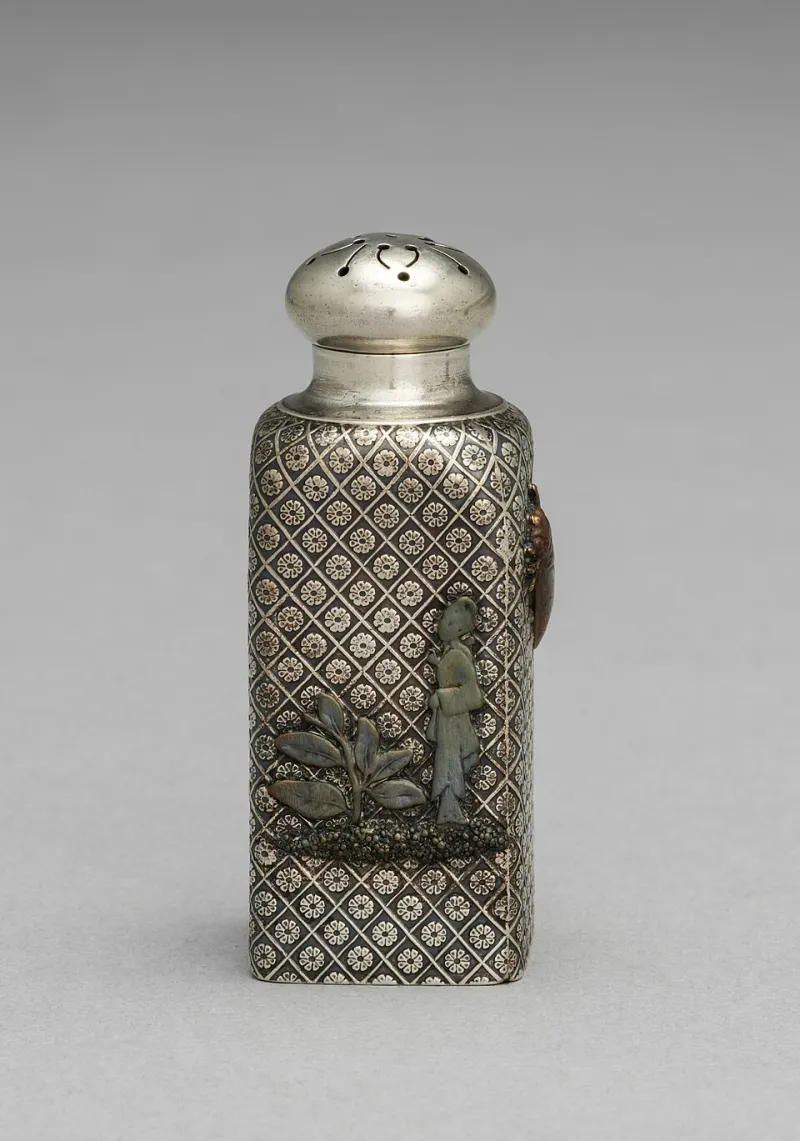
Photo: Unknown, CC0, via Wikimedia Commons
Salt has had a rough few decades in American health culture. It got pulled from restaurant tables, reformulated out of processed foods, and assigned its own warning line on nutrition labels. The message has been consistent and loud: sodium raises blood pressure, and high blood pressure kills people, so eat less salt.
That chain of logic isn't invented. The research connecting high sodium intake to hypertension is real, and hypertension genuinely is a leading risk factor for heart disease and stroke. Nobody made that up.
But somewhere along the way, a finding that applied clearly to a specific subset of the population got packaged into advice for everyone. And the part that got quietly left out — that some people's bodies are highly sensitive to sodium while others process it with barely any cardiovascular response — turns out to matter quite a bit.
The Discovery That Started Everything
The foundational science behind salt reduction advice came largely from population-level studies and animal research in the mid-20th century that found consistent associations between high-sodium diets and elevated blood pressure. The INTERSALT study in the late 1980s, which looked at sodium intake and blood pressure across 52 populations worldwide, reinforced the connection and gave public health authorities the ammunition to make sodium reduction a cornerstone of dietary guidance.
The logic was compelling and the stakes were high, so the recommendation spread fast. By the time the American Heart Association and federal dietary guidelines were routinely recommending sodium limits, the salt-blood pressure link had become one of the most firmly established pieces of conventional health wisdom in the country.
What the population-level data couldn't easily show was the enormous variation in how individual bodies responded to sodium. That part of the story took longer to surface.
Salt Sensitivity Is Real — And It's Not Universal
Researchers began identifying what they call "salt sensitivity" — a measurable difference in how much a person's blood pressure responds to changes in sodium intake — as far back as the 1970s. Work by Dr. Lewis Dahl at Brookhaven National Laboratory showed that rats bred for salt sensitivity developed hypertension on high-sodium diets, while salt-resistant rats did not. The parallel in humans turned out to be equally real.
Studies since then have consistently found that roughly 25 to 50 percent of people with hypertension and about 25 percent of people with normal blood pressure are genuinely salt-sensitive — meaning their blood pressure rises meaningfully when they consume more sodium and drops when they consume less. For these individuals, cutting salt is directly useful advice.
But the other half of people with hypertension, and the majority of people with normal blood pressure, show little to no meaningful blood pressure response to changes in sodium intake. Their kidneys handle the extra sodium efficiently, their blood pressure stays relatively stable, and the dietary restriction offers limited measurable benefit.
A 2011 analysis published in the Journal of the American Medical Association added a wrinkle that made some cardiologists uncomfortable: among people without hypertension, lower sodium intake was actually associated with higher rates of cardiovascular mortality in some cohorts. The finding was contested and the debate got heated, but it put a spotlight on the fact that blanket sodium reduction wasn't as straightforwardly beneficial as the standard advice implied.
What Determines Whether You're Salt-Sensitive?
Genetics play a substantial role. Several gene variants associated with kidney sodium handling, the renin-angiotensin-aldosterone system (the hormonal pathway that regulates blood pressure), and cell membrane ion transport have been linked to salt sensitivity. These variants are not evenly distributed across populations, which helps explain why research has consistently found higher rates of salt sensitivity among Black Americans — a disparity that has direct implications for how dietary advice should be personalized.
Age matters too. Salt sensitivity tends to increase with age, meaning someone whose blood pressure was unresponsive to sodium in their 30s may become more sensitive by their 60s. Kidney function, obesity, and diabetes also affect how the body handles sodium.
The frustrating part from a practical standpoint is that there's currently no simple clinical test most people can get at a routine checkup to determine whether they're salt-sensitive. The research protocols that measure it — carefully controlled sodium loading and restriction over days while monitoring blood pressure — aren't feasible in standard medical practice. So the blanket recommendation persists partly because the individualized alternative isn't yet accessible.
Why the One-Size Advice Stuck
Public health messaging almost always trades nuance for reach. A recommendation that says "most people with hypertension should reduce sodium, and the effect varies significantly based on genetic factors that are difficult to test for individually" is accurate but nearly impossible to turn into a campaign. "Eat less salt" fits on a pamphlet.
There's also the logic that sodium reduction is unlikely to hurt most people and might help some, so recommending it broadly has a low downside. That calculus is reasonable as far as it goes — but it does mean that a large portion of the population has spent years carefully avoiding the salt shaker for a benefit they may not biologically be in a position to receive.
What This Actually Means for You
None of this is an argument for ignoring sodium entirely. If you have diagnosed hypertension, especially if you're older, have kidney disease, or have a family history of salt-sensitive high blood pressure, reducing sodium intake is still well-supported advice worth following.
But if you have normal blood pressure and no risk factors, the urgency of the salt warning is considerably less clear-cut than decades of public health messaging have suggested. The science has always been more complicated than the guidelines let on — it just took a while for that complexity to find its way into the conversation.
The short version: Salt raises blood pressure — for some people. For others, the effect is small enough to be clinically unremarkable. The blanket advice to cut sodium was built on real science, but applied more broadly than the evidence actually supports.