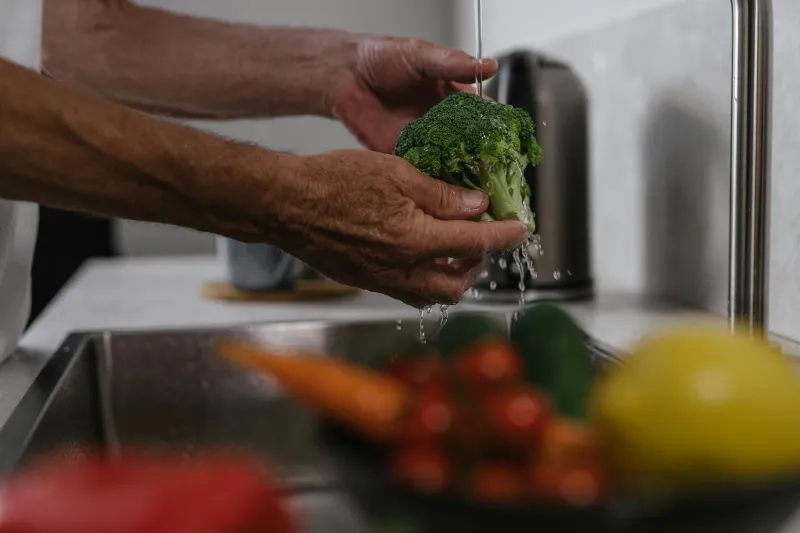
Walk into any American kitchen during dinner prep, and you'll likely witness a ritual passed down through generations: the careful rinsing of raw chicken under cold running water. Grandmothers taught mothers, mothers taught daughters, and everyone assumed they were washing away dangerous germs before cooking.
Turns out, they were doing the exact opposite.
The Splash Zone Science
Food safety researchers at North Carolina State University used high-speed cameras and fluorescent markers to track what actually happens when water hits raw chicken. The results were alarming: bacteria-laden droplets shot up to three feet in every direction, landing on cutting boards, dish towels, nearby vegetables, and even the cook's clothing.
 Photo: North Carolina State University, via aptrust.org
Dr. Jennifer Quinlan, a food safety expert at Drexel University, puts it bluntly: "Rinsing raw poultry is like setting off a bacteria bomb in your kitchen sink."
 Photo: Drexel University, via drexel.edu
The invisible spray carries Salmonella and Campylobacter — the two leading causes of foodborne illness in America — to surfaces where they can survive for hours or even days. A single contaminated droplet on a salad bowl or coffee mug can cause serious illness.
Where the Rinsing Ritual Began
The chicken-washing tradition stems from an era when food safety looked completely different. Before modern processing plants and refrigerated transport, chickens often arrived at home kitchens covered in visible dirt, feathers, and blood. Rinsing made obvious sense.
Cookbooks from the 1940s and 1950s routinely instructed home cooks to "wash chicken thoroughly under cold running water." Julia Child's influential "Mastering the Art of French Cooking" recommended rinsing, and countless cooking shows reinforced the practice.
But modern poultry processing changed everything. Today's chicken arrives at grocery stores already cleaned and inspected. The visible grime that once made rinsing logical simply isn't there anymore.
Heat Trumps Water Every Time
Here's what food scientists know for certain: cooking chicken to 165°F destroys all foodborne pathogens instantly. Water temperature from your kitchen faucet — typically around 50-60°F — can't touch bacteria like Salmonella, which happily multiplies at temperatures up to 115°F.
"People think they're being extra careful by rinsing, but they're solving a problem that doesn't exist while creating one that does," explains Dr. Ben Chapman, a food safety specialist at North Carolina State.
The USDA quietly updated its recommendations in 2005, advising against rinsing raw poultry. Yet surveys show that 67% of American home cooks still rinse chicken regularly, suggesting the message hasn't reached kitchen countertops.
The Cultural Sticking Power
Why does the rinsing habit persist despite official guidance? Food traditions carry emotional weight that transcends scientific evidence. When your trusted grandmother taught you to rinse chicken "to be safe," questioning that practice can feel like questioning her wisdom.
Social media compounds the problem. Food bloggers and cooking influencers continue showing rinsing techniques, often without mentioning updated safety guidelines. Pinterest boards overflow with "proper chicken prep" tutorials that perpetuate outdated practices.
Breaking the Cycle
Food safety experts recommend a simpler approach: remove chicken from packaging directly into your cooking vessel or onto a designated cutting board. Pat dry with paper towels if needed, then cook immediately to proper temperature.
Wash your hands thoroughly after handling raw chicken, sanitize any surfaces the meat touched, and trust that heat will handle the bacteria far more effectively than your kitchen sink ever could.
The next time you see someone rinsing raw chicken, remember: they're not being careless with food safety. They're following advice that made perfect sense fifty years ago but creates unnecessary risk today. Sometimes the safest thing to do is nothing at all.