Squinting at Books Won't Wreck Your Vision — But Generations of Parents Believed Otherwise
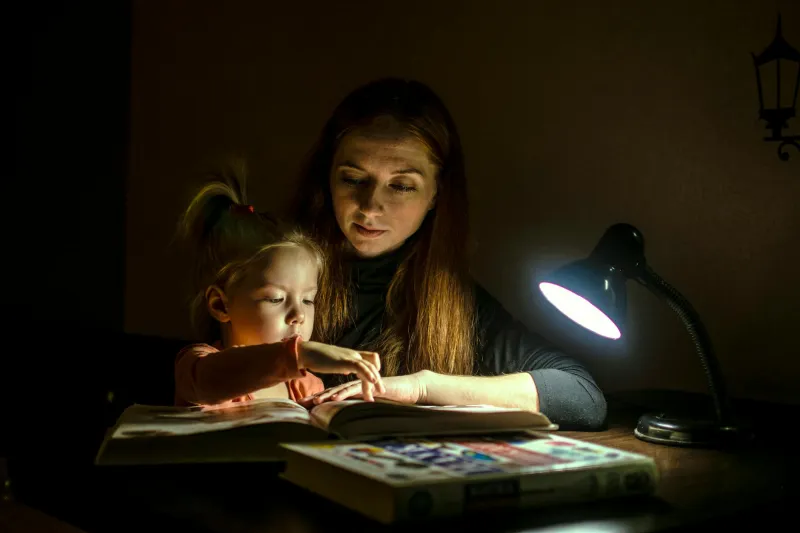
Picture this: You're curled up with a good book as evening light fades, and suddenly a parent appears like a vision-protecting superhero. "You'll ruin your eyes reading in the dark!" they declare, flipping on the nearest lamp. Sound familiar?
For generations, this warning echoed through households across America. Kids were told that squinting at pages in dim light would cause permanent eye damage, maybe even blindness. The message was clear: poor lighting equals poor vision for life.
There's just one problem with this deeply ingrained belief — it's not actually true.
What Really Happens When You Read in Low Light
When ophthalmologists started seriously studying this claim, they found something surprising: no evidence that dim lighting causes lasting eye damage. None.
Here's what actually happens when you read in low light. Your pupils dilate to let in more light, and the muscles around your eyes work harder to focus. This extra effort can cause eye strain, which feels like tiredness, mild headaches, or that gritty sensation in your eyes. But these symptoms disappear once you rest your eyes or improve the lighting.
Dr. Richard Rosen, an ophthalmologist at New York Eye and Ear Infirmary, puts it simply: "Reading in dim light is like exercising — it might make your eyes feel tired, but it won't damage them."
Your eyes are remarkably resilient. The same way lifting a heavy box might make your arms sore without causing permanent muscle damage, straining to read in poor light might make your eyes uncomfortable without harming your vision.
The Parenting Rule That Wouldn't Die
So if dim light reading is harmless, why did this become such a universal parenting commandment? The answer lies in how temporary discomfort got confused with permanent damage.
When kids complained of tired, achy eyes after reading in poor light, concerned parents naturally assumed something harmful was happening. The immediate cause-and-effect seemed obvious: dim light caused eye problems. What they didn't realize was that the "problems" were temporary and harmless.
This confusion makes perfect sense when you consider the era when this belief took hold. In the early-to-mid 20th century, before widespread access to eye specialists, parents had to rely on common sense and word-of-mouth wisdom. If reading in dim light made eyes hurt, it seemed logical that it must be causing damage.
The myth also gained traction because it aligned with broader cultural beliefs about "proper" behavior. Good posture, good lighting, good habits — these were markers of responsible living. Warning kids about dim light reading fit perfectly into this framework of moral and physical virtue.
When Eye Strain Became Eye Damage
The persistence of this myth reveals something fascinating about how medical misconceptions spread. Eye strain — a real, if temporary, condition — became conflated with eye damage in the public imagination.
Eye strain from reading in poor light can cause:
- Tired, achy eyes
- Mild headaches
- Difficulty focusing
- Increased blinking
- Watery or dry eyes
But notably absent from this list? Any form of permanent vision loss or eye damage.
The confusion deepened because some people who spend years doing close-up work (like reading) do develop nearsightedness. But research shows this happens regardless of lighting conditions. Genetics, the amount of close-up work, and time spent outdoors all play bigger roles in vision development than the brightness of your reading lamp.
What Actually Affects Your Long-Term Vision
While dim light reading won't harm your eyes, other factors genuinely do matter for long-term eye health:
UV exposure poses real risks. Unlike the imaginary dangers of dim light, ultraviolet rays can actually damage your retina and increase cataract risk. That's why sunglasses matter more than reading lamps.
Screen time and digital eye strain create symptoms similar to dim light reading — tiredness, dryness, headaches — but again, no permanent damage. The 20-20-20 rule (look at something 20 feet away for 20 seconds every 20 minutes) helps manage discomfort.
Regular eye exams catch real problems early. Conditions like glaucoma and macular degeneration develop silently and benefit from early detection.
Genetics plays the biggest role in vision problems like nearsightedness, farsightedness, and many eye diseases.
The Comfort Factor
Here's the thing: even though reading in dim light won't damage your eyes, good lighting still makes sense. Just like you'd choose a comfortable chair over a wooden stool, proper lighting reduces eye strain and makes reading more enjoyable.
The American Optometric Association recommends ambient lighting plus a focused light source for reading. Not because dim light is dangerous, but because comfort matters.
Why the Myth Endures
This belief persists partly because it feels intuitive. We know that squinting and straining generally aren't good for our bodies, so it seems logical that straining our eyes might cause damage.
The myth also endures because it's largely harmless. Unlike some health misconceptions that prevent people from seeking real treatment, encouraging good lighting doesn't hurt anyone. Parents continue passing along this "wisdom" because it seems like responsible advice, even if it's based on outdated assumptions.
Plus, the immediate discomfort of eye strain provides seemingly convincing "evidence" that something harmful is happening. When your eyes feel tired after reading in dim light, it reinforces the belief that you're damaging them.
The Real Takeaway
Your parents meant well when they warned about reading in dim light, but they were solving a problem that didn't exist. Eye strain is real, but eye damage from poor lighting isn't.
This doesn't mean you should start reading by candlelight — comfort still matters. But if you occasionally find yourself squinting at a book as daylight fades, you can relax. Your vision will be just fine.
The next time you hear someone warn about the dangers of dim light reading, you'll know the truth: it's one of those myths that sounds scientific but never actually was. Sometimes the most persistent health beliefs are the ones that feel most obviously true — even when they're not.