How Nobel Prize Brain Research Got Twisted Into Corporate Training Nonsense About Left and Right Brain Types
The Personality Test That Started With Brain Surgery
Somewhere in your past — maybe in school, maybe at work, maybe in a magazine quiz — someone told you that you're either a "left-brain" logical type or a "right-brain" creative type. This neat division of human personality has become so embedded in American culture that people casually drop it into conversations about why they're bad at math or good at art.
But this popular framework traces back to Nobel Prize-winning research that had absolutely nothing to do with personality types. It was about epilepsy patients who'd had their brains surgically split in half.
The Real Research That Started It All
In the 1960s, neuroscientist Roger Sperry studied patients who'd undergone corpus callosotomy — a surgical procedure that cuts the connection between the brain's two hemispheres. This drastic surgery was a last resort for people with severe epilepsy, designed to prevent seizures from spreading between brain halves.
 Photo: Roger Sperry, via 0701.static.prezi.com
Sperry's experiments with these "split-brain" patients revealed fascinating insights about how the hemispheres normally communicate. When the connection was severed, each hemisphere could process information independently, leading to some remarkable discoveries about brain function.
For this groundbreaking research, Sperry won the Nobel Prize in Physiology or Medicine in 1981. His work genuinely advanced our understanding of brain architecture and neural communication.
Where Science Became Self-Help
The leap from Sperry's surgical research to personality typing happened almost immediately, but it wasn't Sperry making that leap. Pop psychology authors and corporate trainers saw his findings about hemisphere differences and extrapolated them into a theory about how normal, intact brains work.
Books like "Drawing on the Right Side of the Brain" (1979) popularized the idea that creativity lived in the right hemisphere while logic resided in the left. Corporate training programs embraced this framework because it offered a simple way to categorize employees and explain workplace dynamics.
 Photo: Drawing on the Right Side of the Brain, via images.squarespace-cdn.com
By the 1980s, you could barely attend a business seminar without encountering some variation of left-brain/right-brain personality assessment. The concept had evolved from cutting-edge neuroscience to management consulting gold mine.
Why Normal Brains Don't Work Like Split Brains
Here's the fundamental problem: Sperry's research involved brains that had been surgically altered in an extreme way. These patients' hemispheres couldn't communicate normally because the connection between them had been severed. Drawing conclusions about normal brain function from split-brain patients is like studying how cars work by examining vehicles with their axles cut in half.
In intact brains, the two hemispheres are in constant communication through the corpus callosum — a thick bundle of nerve fibers that transfers information between sides millions of times per second. This communication is so extensive that the idea of one hemisphere "dominating" personality traits doesn't match how the brain actually operates.
What Modern Brain Imaging Actually Shows
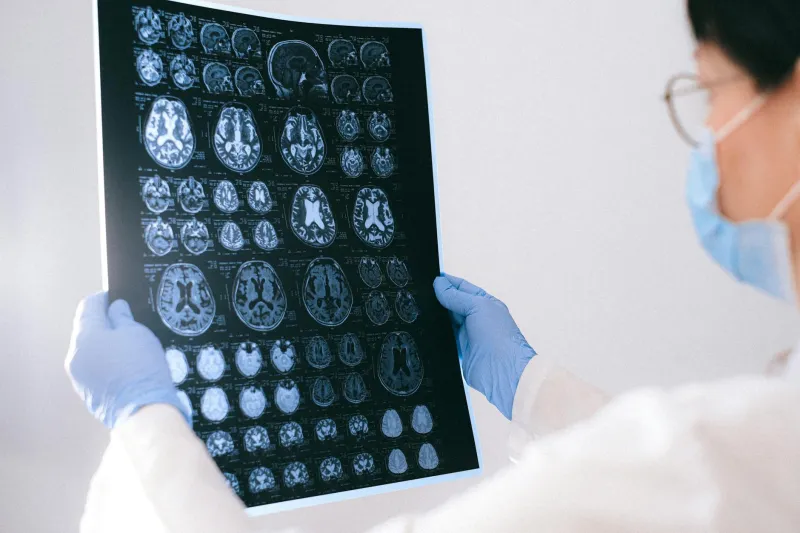
Advances in brain imaging technology have allowed researchers to watch normal brains in action, and the results don't support the left-brain/right-brain personality theory. When people engage in supposedly "left-brain" activities like math or logic, both hemispheres activate. When they do "right-brain" tasks like drawing or music, both sides participate.
Certain functions do show some lateralization — language processing tends to happen more in the left hemisphere for most people, while spatial processing involves more right-hemisphere activity. But these tendencies are subtle, and they don't translate into personality types or learning styles.
A 2013 study analyzed brain scans from over 1,000 people and found no evidence that individuals use one hemisphere more than the other. The researchers concluded that the brain operates as an integrated network, not as competing halves.
The Corporate Training Cash Cow
Despite decades of neuroscience research debunking hemisphere-based personality typing, the corporate training industry continues to embrace it. Walk into any office supply store and you'll find books promising to help you "unlock your right-brain creativity" or "develop your left-brain analytical skills."
This persistence isn't about science — it's about simplicity. The left-brain/right-brain framework offers an appealingly straightforward way to explain complex human differences. It's much easier to tell someone they're a "right-brain creative type" than to explain the actual complexity of how personality, cognition, and brain function interact.
Why the Myth Refuses to Die
The left-brain/right-brain concept persists because it feels true to many people's experience. Some individuals do lean more toward analytical thinking while others gravitate toward creative pursuits. The mistake is assuming these preferences reflect fundamental brain architecture rather than complex interactions between genetics, experience, education, and environment.
The myth also provides a convenient excuse for perceived weaknesses. "I'm just not a math person — I'm right-brained" sounds more scientific than "I struggled with math in school and avoided it afterward."
The Real Story About Your Brain
Your brain doesn't have a creative side and a logical side competing for control. Instead, it operates as an incredibly sophisticated network where different regions collaborate constantly. Mathematical thinking involves visual and spatial processing (traditionally considered "right-brain" functions), while artistic creation requires planning and analysis (supposedly "left-brain" activities).
The most creative and analytical people tend to use their entire brains more effectively, not just one hemisphere. Innovation happens when different brain networks work together, not when one side dominates the other.
Moving Beyond the Split
Understanding that the left-brain/right-brain personality framework is scientifically unfounded doesn't diminish human diversity — it actually reveals how much more interesting and complex our minds really are. Instead of being limited by artificial categories, we can appreciate that everyone's brain is capable of both analytical and creative thinking.
The next time someone asks whether you're left-brained or right-brained, you can confidently answer: "Neither. I'm whole-brained, just like everyone else."