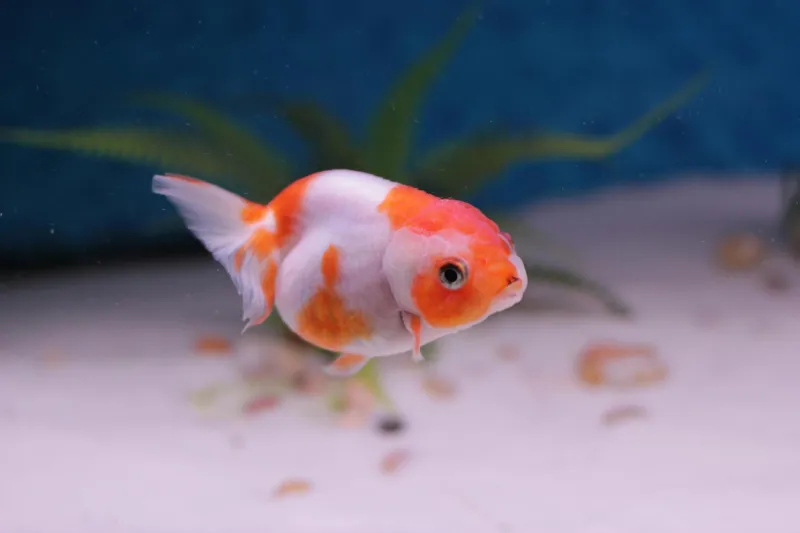
"You have the memory of a goldfish." It's an insult that stings precisely because everyone "knows" goldfish can only remember things for three seconds. Politicians use it to mock opponents, parents deploy it against distracted teenagers, and office workers mutter it about forgetful colleagues.
There's just one problem: goldfish memory lasts months, not seconds. And scientists have known this for decades.
The Laboratory Truth
Researchers at Plymouth University trained goldfish to navigate mazes, remember feeding schedules, and even play soccer — underwater soccer, but still. The fish demonstrated clear learning patterns and retained information for at least three months, the longest period researchers bothered to test.
 Photo: Plymouth University, via fcbsassetserver.azurewebsites.net
Dr. Phil Gee's team went further, teaching goldfish to distinguish between different pieces of classical music and respond to various colored lights on command. "These fish showed sophisticated learning abilities that would be impressive in any vertebrate," Gee noted in his published findings.
 Photo: Dr. Phil Gee, via www.parkinson.org
Israeli researchers discovered goldfish could learn to avoid areas where they'd previously received mild electric shocks, remembering these danger zones for weeks. Other studies documented goldfish recognizing their owners' faces and getting excited at feeding time — behaviors impossible with three-second memory spans.
Tracing the Myth's Origins
So where did the three-second story begin? Unlike many scientific myths, this one lacks a clear origin point. No respected researcher ever published findings suggesting goldfish memory lasted mere seconds.
Instead, the myth appears to have emerged from a perfect storm of assumptions and oversimplifications. Early aquarium guides from the 1960s mentioned that goldfish seemed to "forget" their surroundings quickly, likely referring to their habit of exploring the same areas repeatedly.
Pet store employees, lacking formal animal behavior training, may have repeated simplified explanations to customers asking why their goldfish kept swimming in circles. "They forget where they've been" sounds reasonable enough, and somewhere along the way, "quickly" became "three seconds."
Why This Myth Stuck
The three-second goldfish memory myth persists because it serves multiple cultural purposes beyond actual fish biology. It provides a convenient metaphor for short attention spans in our digital age. It justifies keeping goldfish in small bowls (if they can't remember anyway, why give them space?). Most importantly, it makes people feel superior to a "simple" creature.
Television and movies reinforced the myth through countless references. Finding Nemo's Dory, supposedly a blue tang fish, popularized similar ideas about fish memory. Comedians built entire routines around forgetful goldfish, and the joke became more real than reality.
 Photo: Finding Nemo, via www.cmtsj.org
The Attention Span Connection
The myth gained renewed relevance as human attention spans became a cultural obsession. Microsoft famously claimed in 2015 that human attention spans had dropped below goldfish levels — eight seconds versus nine seconds. The statistic went viral despite being based on questionable research methodology.
This comparison only worked because everyone already "knew" goldfish had terrible memories. The irony? If Microsoft's numbers were accurate, it meant goldfish actually had better attention spans than humans, not worse.
Real Goldfish Intelligence
Actual goldfish behavior reveals remarkable cognitive abilities. They can be trained to perform tricks, recognize different people, and even play simple games. Some goldfish learn to swim through hoops, push balls into goals, or follow finger movements outside their tank.
Professional aquarists report goldfish developing distinct personalities and preferences. Some become territorial, others remain social. Many learn daily routines and anticipate regular activities like feeding or tank cleaning.
Breaking the Stereotype
The goldfish memory myth represents something larger: how oversimplified "facts" about animals persist despite contradicting evidence. We tell similar stories about ostriches burying their heads in sand (they don't), lemmings committing mass suicide (they don't), and bulls getting enraged by red colors (they can't even see red).
These myths often serve human psychological needs more than scientific accuracy. They create hierarchies where humans sit comfortably above "lesser" creatures, justifying how we treat them.
The Takeaway
Next time someone mentions goldfish memory, you'll know the real story. These fish remember their environment for months, learn complex behaviors, and demonstrate problem-solving skills that would impress any pet owner willing to look closely.
The three-second myth says more about human assumptions than goldfish brains. Sometimes the most persistent "facts" are the ones that make us feel better about ourselves, regardless of what science actually shows.