The Flashlight Under the Covers Never Hurt Anyone — But Generations of Parents Still Think It Did
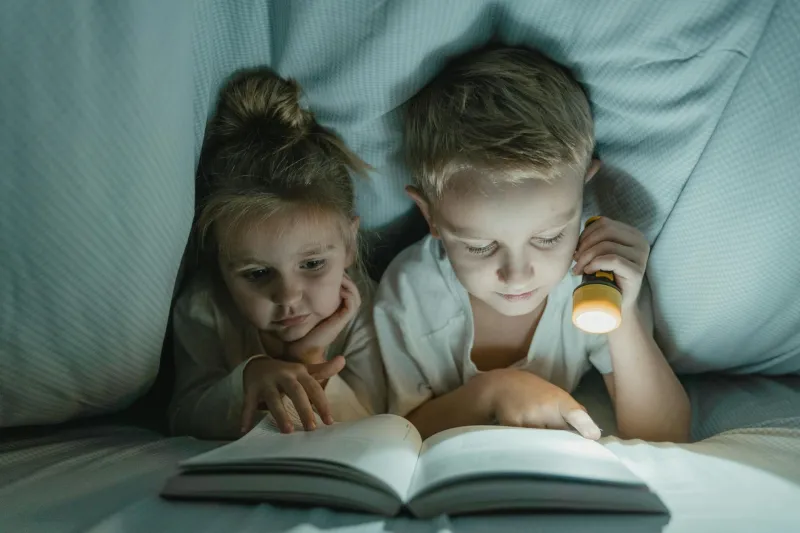
Every parent has said it. Every kid has heard it. "Stop reading in that dim light — you'll ruin your eyes!"
For over a century, this warning has echoed through American households, passed down from generation to generation like a sacred truth. Parents have confiscated flashlights, flicked on overhead lights, and delivered stern lectures about the permanent damage that supposedly comes from squinting at pages in poor lighting.
But here's what ophthalmologists have been trying to tell us for decades: reading in dim light won't damage your vision. Not even a little bit.
What Actually Happens When You Read in Low Light
When you strain to read in dim conditions, your eyes work harder. The pupils dilate to let in more light, the focusing muscles tighten, and you might find yourself blinking less as you concentrate. This extra effort leads to eye fatigue — that tired, achy feeling that makes you want to rub your eyes.
Think of it like doing bicep curls. Your arm muscles get tired and sore, but they're not damaged. They recover completely with rest. Your eye muscles work the same way.
Dr. Rachel Bishop, an ophthalmologist at the National Eye Institute, puts it simply: "There is no evidence that reading in dim light causes permanent eye damage. It may cause eye strain, but this is temporary and goes away with rest."
Yet somehow, temporary discomfort became conflated with permanent harm in the collective parental consciousness.
How a Reasonable Concern Became an Overblown Fear
The myth likely started with a grain of truth. In the early 1900s, when electric lighting was still new and expensive, many families relied on dim oil lamps or candles for evening activities. Reading by flickering candlelight genuinely was difficult and uncomfortable.
Parents noticed their children rubbing their eyes and complaining of headaches after reading in poor light. The logical conclusion? This must be harmful. And if it causes discomfort now, surely it's causing damage we can't see.
This reasoning made perfect sense in an era when people understood less about how the eye actually works. If something hurt, it was probably harmful — a useful rule of thumb for most situations, just not this one.
The fear gained momentum as electric lighting became standard. Parents who had grown up with warnings about dim reading conditions passed those warnings to their children, even as homes became brighter and the original problem largely disappeared.
Why the Myth Feels So True
The dim light warning persists because it seems to make perfect sense. When kids read with flashlights under blankets, they often emerge with red, watery eyes and complaints of tiredness. Parents see immediate "evidence" that damage is occurring.
But correlation isn't causation. Those symptoms come from eye strain and fatigue, not injury. It's the difference between being out of breath after running stairs and having damaged lungs.
The myth also taps into a deeper parental instinct: protecting children from things that might harm them later. Even if dim reading doesn't cause damage, it feels irresponsible not to warn against it. Better safe than sorry, right?
What Eye Doctors Want Parents to Know
Modern ophthalmology has thoroughly studied this question. Researchers have examined people who regularly read in low light conditions — from students cramming for exams to night shift workers reading by minimal lighting. The verdict is unanimous: temporary eye strain, yes. Permanent damage, no.
The American Academy of Ophthalmology states clearly: "Reading in dim light does not damage your eyes, although it may tire them."
What actually threatens children's vision? Genetics play the biggest role in conditions like nearsightedness. Excessive screen time at close distances might contribute to myopia development, but that's a separate issue from lighting conditions.
The Real Lessons About Eye Health
While the dim light myth is harmless, it can distract from actual eye health concerns. Parents worried about their children's vision should focus on:
- Regular eye exams to catch real problems early
- Encouraging outdoor play, which may help prevent myopia
- Teaching the 20-20-20 rule for screen time: every 20 minutes, look at something 20 feet away for 20 seconds
- Watching for signs of genuine vision problems like squinting, headaches, or difficulty seeing distant objects
Breaking the Cycle
The next time you catch a child reading under blankets with a flashlight, you might still tell them to turn on a proper light — but not because you're worried about permanent eye damage. Good lighting simply makes reading more comfortable and enjoyable.
And maybe, just maybe, you can break the century-old cycle of this particular parental worry. Their eyes will be just fine, whether they're reading by lamplight or flashlight.
Sometimes the most persistent health myths are the ones that sound the most reasonable. This is one of them.