The Eight-Glass Water Rule Started as a Government Typo That Fooled Generations of Americans
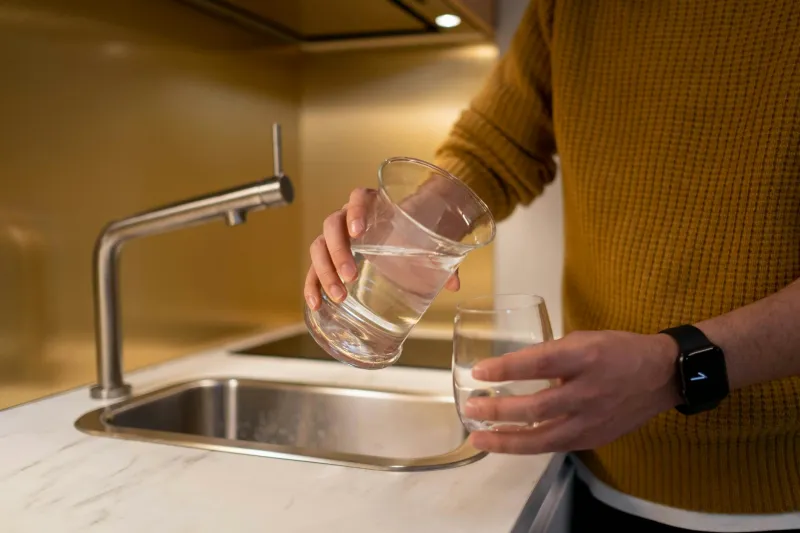
Walk into any American office, gym, or wellness conversation, and you'll hear the same mantra: drink eight glasses of water a day. It's repeated with the confidence of scientific gospel, passed down from parents to children, printed on water bottles, and preached by health influencers.
But here's what almost nobody knows: the eight-glass rule isn't based on rigorous scientific research. It's the result of a spectacular misreading that's persisted for nearly 80 years.
The 1945 Report Everyone Got Wrong
The story begins in 1945, when the Food and Nutrition Board of the National Research Council published a recommendation that adults consume "approximately 1 milliliter of water for each calorie of food" — roughly 2.5 liters, or about eight glasses, for the average person.
Sounds like the birth of our beloved rule, right? Not quite.
The very next sentence in that 1945 report contained a crucial detail that somehow got lost in translation: "Most of this quantity is contained in prepared foods." The researchers weren't telling Americans to drink eight additional glasses of water. They were describing total daily fluid intake, including the water already in coffee, soup, fruits, vegetables, and every other food and beverage.
Somehow, that second sentence disappeared from public consciousness, leaving behind a simplified rule that transformed a nuanced recommendation into a daily water-drinking marathon.
How a Misunderstanding Became Gospel
The eight-glass rule gained momentum through repetition rather than research. Health books in the 1970s and 80s began citing it without the food context. Bottled water companies discovered it made excellent marketing material. Fitness magazines turned it into a cornerstone of healthy living.
By the 1990s, the rule had achieved something remarkable in nutrition science: universal acceptance without anyone questioning its origins. It became one of those "facts" that felt so obviously true that nobody bothered to verify it.
The irony is that legitimate hydration research was happening during these decades, but it painted a much more complex picture than eight neat glasses.
Your Body Already Knows What It's Doing
Here's what actual hydration science reveals: your individual water needs depend on dozens of factors that make any universal recommendation essentially meaningless.
A 120-pound office worker in Minneapolis needs far less fluid than a 200-pound construction worker in Phoenix. Someone eating watermelon and soup gets more dietary water than someone living on crackers and cheese. Your kidneys, evolved over millions of years, are remarkably good at maintaining fluid balance without conscious counting.
The human body has sophisticated mechanisms for managing hydration. When you need water, you feel thirsty. When you have enough, your kidneys efficiently process the excess. This system worked perfectly fine for our ancestors, who definitely weren't carrying around marked water bottles.
The Real Hydration Guidelines Are Surprisingly Simple
Modern research suggests most healthy adults maintain adequate hydration by simply drinking when thirsty and paying attention to basic cues. Your urine color provides a more reliable hydration indicator than any glass-counting system — pale yellow generally means you're doing fine.
The Institute of Medicine, which replaced that 1945 organization, now recommends about 15.5 cups of fluids daily for men and 11.5 cups for women. But again, this includes all beverages and food sources, not just plain water.
For most Americans eating typical diets, about 20% of daily fluid intake comes from food. Coffee, tea, milk, and other beverages contribute significantly to hydration, despite persistent myths about caffeine being dehydrating (which is another oversimplification that deserves its own article).
Why the Myth Refuses to Die
The eight-glass rule persists because it offers something people crave: a simple, actionable health guideline in a world of confusing nutritional advice. It's easy to remember, easy to track, and makes people feel proactive about their health.
The bottled water industry, worth billions annually, has little incentive to complicate this message. Wellness culture embraces it because visible water consumption signals health consciousness. It's become a ritual that feels virtuous, regardless of necessity.
There's also a psychological component: many people do feel better when they focus on drinking more water, but this often has less to do with reaching optimal hydration and more to do with replacing less healthy beverages or simply paying attention to their body's signals for the first time.
The Takeaway: Trust Your Thirst
The real story of hydration is both simpler and more personalized than the eight-glass rule suggests. Your body evolved sophisticated systems to maintain fluid balance, and for most healthy people, these systems work perfectly without conscious intervention.
Drink when you're thirsty. Notice if your urine is consistently dark (which might indicate dehydration) or if you're experiencing symptoms like persistent headaches or fatigue that could be fluid-related. But don't stress about hitting an arbitrary number that was never meant to be a standalone target in the first place.
The eight-glass rule isn't dangerous — staying well-hydrated is certainly better than being dehydrated. But it's a perfect example of how health advice can take on a life of its own, transforming from a misunderstood government report into an unquestioned American health commandment.
Sometimes the most liberating health advice is also the simplest: your body usually knows what it needs, and it's been successfully managing its hydration long before anyone started counting glasses.