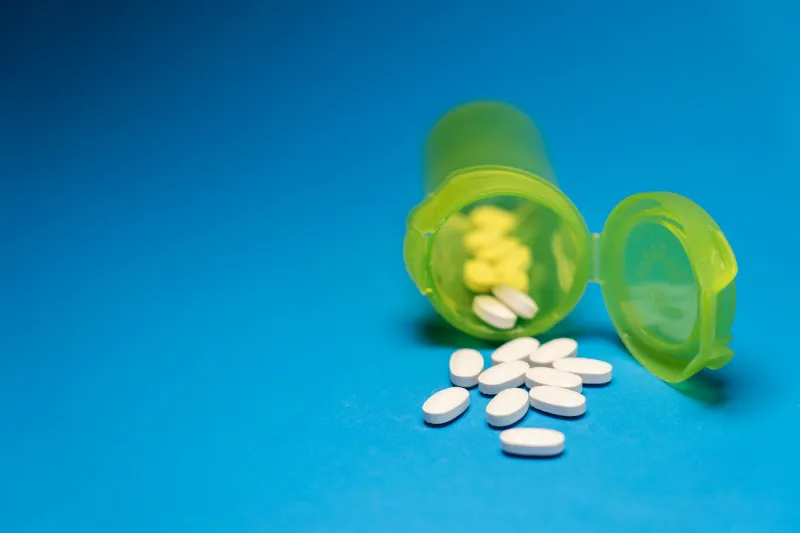
The logic seems bulletproof: if one antibiotic pill fights infection, two pills should fight it twice as hard. When strep throat feels unbearable or a UTI becomes excruciating, the temptation to double up on medication feels like common sense.
It's also completely wrong — and potentially dangerous.
The Steady-State Strategy
Antibiotics don't work like painkillers, where more medicine often equals more relief. Instead, they function on a precise schedule designed to maintain steady drug concentrations in your bloodstream over several days.
Dr. Sarah Chen, an infectious disease specialist at Johns Hopkins, explains it this way: "Think of antibiotics like a steady drip of poison that slowly overwhelms bacteria colonies. Flooding the system doesn't kill bacteria faster — it just wastes medicine and creates side effects."
 Photo: Johns Hopkins, via wallpapers.com
When you take prescribed doses at regular intervals, antibiotic levels in your blood rise and fall in a carefully calibrated pattern. This consistency ensures bacteria face constant pressure without giving them recovery time between doses.
Why More Isn't Better
Doubling antibiotic doses disrupts this delicate balance in several dangerous ways. First, sudden spikes in drug concentration can trigger severe side effects: nausea, diarrhea, liver stress, and allergic reactions become more likely when your system gets overwhelmed.
Second, erratic dosing creates opportunities for bacterial resistance. When antibiotic levels swing wildly, some bacteria survive the peaks and multiply during the valleys. These survivors carry genetic mutations that help them resist future antibiotic treatment.
"It's like training bacteria to become superbugs," warns Dr. Michael Torres, a pharmacologist at UCLA Medical Center. "Irregular dosing gives them practice surviving antibiotic exposure."
 Photo: UCLA Medical Center, via www.helixelectric.com
The American More-Is-Better Culture
Why do so many Americans instinctively reach for extra pills when illness strikes? Our cultural relationship with medicine emphasizes immediate results and personal control. If symptoms persist after taking prescribed medication, doubling the dose feels like taking charge of your health.
This mindset works for some medications. Extra acetaminophen can provide more pain relief (within safe limits). Additional cough syrup might suppress symptoms more effectively. But antibiotics operate under completely different biological rules.
Surveys suggest that nearly 30% of American adults have taken extra antibiotic doses when feeling severely ill, often without telling their doctors. Many learned this approach from family members or assumed it was obviously safer than "suffering through" prescribed doses.
The Resistance Connection
Antibiotic resistance has become one of modern medicine's most serious threats, partly because of dosing mistakes that seem logical but create evolutionary pressure on bacteria. The CDC estimates that resistant infections kill 35,000 Americans annually — a number that could rise dramatically if current trends continue.
When patients skip doses, stop treatment early, or take extra pills, they create environments where bacteria can adapt and survive. These resistant strains then spread to other people, making future infections harder to treat for everyone.
"Every time someone takes antibiotics incorrectly, they're potentially creating a superbug that could harm their family, friends, or community," explains Dr. Lisa Park, an epidemiologist at the CDC.
How Antibiotics Actually Work
To understand why timing matters more than quantity, consider how these drugs attack bacteria. Most antibiotics either prevent bacteria from building cell walls or interfere with their ability to reproduce. Both strategies require sustained pressure over several days.
Bacteria reproduce quickly — some species double their population every 20 minutes under ideal conditions. Maintaining steady antibiotic levels ensures that each new generation faces the same chemical assault, preventing adaptation.
Skipping doses gives bacteria recovery time. Taking extra doses wastes medication without providing additional benefits, since your body can only process so much drug at once.
The Placebo Effect Problem
Many people who double antibiotic doses report feeling better faster, but this improvement likely comes from the placebo effect rather than enhanced medication effectiveness. Believing you've taken "stronger" medicine can genuinely reduce perceived symptoms, even when the extra pills provide no additional therapeutic benefit.
This psychological improvement reinforces the dangerous belief that more antibiotics equal faster healing, creating a cycle where people continue risky dosing practices based on imaginary results.
Following the Science
Proper antibiotic use is surprisingly simple: take prescribed doses at recommended intervals, complete the entire course even after feeling better, and never share pills with others or save leftover medication for future illnesses.
If symptoms worsen or persist beyond expected timeframes, contact your healthcare provider rather than adjusting doses independently. Sometimes infections require different antibiotics, longer treatment periods, or additional medical intervention that only professionals can determine.
The next time illness makes you desperate for faster relief, remember that antibiotics work on bacterial time, not human impatience. Trust the prescription, follow the schedule, and let steady medicine do what sudden overdoses never could.