Your Body Has Way More Than Five Senses — But Schools Keep Teaching Aristotle's Outdated List
Ask any American what the five senses are, and they'll rattle off the same list they learned in kindergarten: sight, hearing, smell, taste, and touch. It's one of those fundamental "facts" that feels as solid as gravity or the alphabet. Except it's not actually a fact at all — it's a 2,400-year-old philosophical guess that somehow became educational gospel.
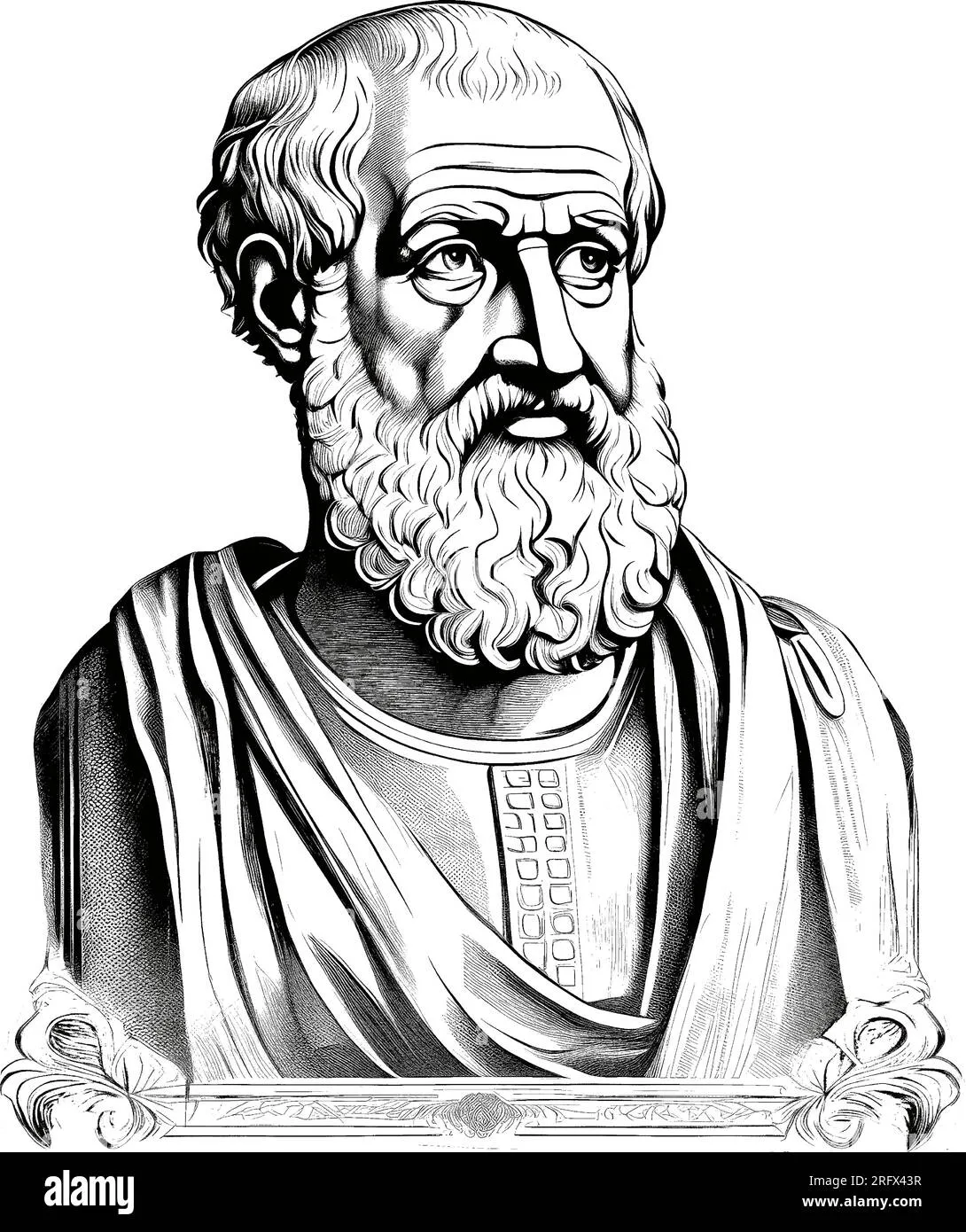 Photo: Aristotle, via c8.alamy.com
Modern neuroscience has identified at least nine distinct sensory systems, and some researchers argue for more than twenty. So why are we still teaching kids Aristotle's incomplete homework?
How Aristotle's Ancient Guess Became Modern "Fact"
Around 350 BCE, the Greek philosopher Aristotle looked around, thought about how humans perceive the world, and came up with five categories: sight, hearing, smell, taste, and touch. For a guy working without microscopes, brain imaging, or any understanding of neurology, it wasn't a bad attempt at organizing human sensory experience.
But here's the thing: Aristotle wasn't doing science in the modern sense. He was creating a philosophical framework for understanding perception. His five-sense model was never meant to be the final word on human sensory capabilities — it was just the best guess available at the time.
The problem is that this ancient framework got embedded in educational curricula and stayed there for centuries. Even as neuroscience advanced and identified additional sensory systems, the five-sense model remained entrenched in textbooks, lesson plans, and popular understanding.
The Senses You Use Every Day But Never Think About
Right now, as you're reading this, you're using several sensory systems that didn't make Aristotle's list. Your sense of balance (the vestibular system) is keeping you upright. Your proprioception is telling you where your arms and legs are positioned without you having to look. Your interoception is monitoring your heart rate, breathing, and internal bodily states.
These aren't exotic or rare sensory experiences — they're fundamental to how you navigate the world every single day. Yet most people can't name them, let alone explain how they work.
Consider proprioception, sometimes called your "sixth sense." Right now, you can close your eyes and touch your nose with your finger because your brain constantly tracks the position of your body parts in space. This isn't touch, sight, or any of the traditional five senses — it's a completely separate sensory system with its own neural pathways and processing centers.
What Modern Neuroscience Actually Recognizes
Depending on how you categorize them, humans have somewhere between nine and more than twenty distinct sensory systems. The conservative list includes:
- Vision (sight)
- Audition (hearing)
- Olfaction (smell)
- Gustation (taste)
- Somatosensation (touch, pressure, temperature)
- Vestibular sense (balance and spatial orientation)
- Proprioception (body position awareness)
- Interoception (internal bodily signals)
- Nociception (pain detection)
Some researchers break these down further. Touch, for example, actually involves multiple distinct sensory pathways for pressure, temperature, vibration, and texture. Pain detection has different neural circuits for different types of pain. Even vision can be subdivided into separate systems for detecting motion, color, and depth.
Why the Five-Sense Model Refuses to Die
There are practical reasons why the traditional five-sense framework has stayed in educational curricula. It's simple, memorable, and easy to demonstrate to young children. You can show a kindergartner how their eyes work, let them taste different foods, and have them identify sounds — concrete experiences that make sense to developing minds.
The additional senses are harder to explain and demonstrate. How do you show a six-year-old what proprioception feels like? How do you make interoception tangible in a classroom setting?
Educational inertia also plays a role. Textbook publishers, curriculum designers, and teachers often stick with established frameworks rather than updating to reflect current scientific understanding. The five-sense model has worked for generations of students, so why change it?
The Real-World Consequences of Incomplete Education
This isn't just an academic curiosity — the five-sense limitation has practical implications. People who lose proprioception due to injury or illness often struggle to get proper support because their condition doesn't fit into familiar sensory categories. Parents might not recognize vestibular processing issues in their children because balance isn't on their radar as a "real" sense.
In fields like virtual reality, user experience design, and rehabilitation medicine, understanding the full range of human sensory capabilities is crucial. Designers who think only in terms of sight and sound miss opportunities to create more immersive and accessible experiences.
How Other Countries Handle This
Interestingly, educational systems in some countries have begun incorporating expanded sensory frameworks into their curricula. Finnish schools, known for educational innovation, often teach children about balance and body awareness alongside the traditional senses. Some Japanese educational approaches emphasize interoception and mindful awareness of internal bodily states.
These aren't radical departures from traditional education — they're simply updates that reflect current scientific understanding rather than ancient philosophical categories.
The Path Forward
The solution isn't necessarily to overwhelm elementary school students with complex neurological concepts. But there's room to expand beyond Aristotle's original five without making things overly complicated.
Simple additions like "balance" and "knowing where your body is" could easily fit into existing lesson plans. Kids already understand these concepts intuitively — they just haven't been taught to think of them as senses.
The Bottom Line
Your body is far more sophisticated than the five-sense model suggests. Every time you walk across a room without falling over, reach for something without looking, or notice that you're hungry, you're using sensory systems that didn't make it into Aristotle's ancient list.
Maybe it's time our educational system caught up with what neuroscience figured out decades ago. After all, if we're going to teach kids about their own bodies, we might as well give them the complete picture instead of the classical highlights reel.